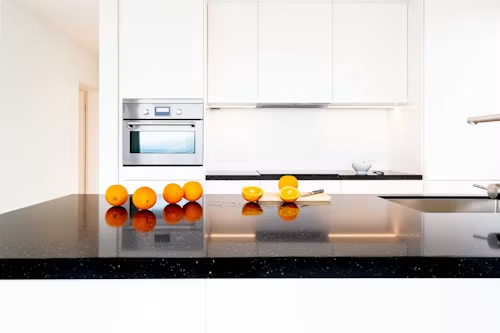
Small kitchens come with their own set of design challenges. Every surface has to earn its place, and material choices matter more than they would in a sprawling open-plan layout. A quartz countertop is particularly well suited to compact kitchens, not just because of its durability, but because of how it can be used to visually expand a tight space. This article looks at practical ways to make the most of a quartz countertop in a small kitchen, along with a few notes on pairing it with a granite sink without overwhelming the room.
Why Quartz Works Well in Tight Spaces
In a small kitchen, every material choice is more visible and more heavily used relative to the size of the room. A quartz countertop holds up to that concentrated use without showing wear quickly, which matters when there is less surface area to distribute daily activity across. It also offers a level of color and pattern consistency that helps a small kitchen feel cohesive rather than cluttered, since there is nowhere for a busy design choice to hide.
Choosing Lighter Tones to Open Up the Room
Lighter quartz countertop colors tend to make small kitchens feel more open, reflecting available light rather than absorbing it. Soft whites, light grays, and pale beige tones are common choices for compact layouts, especially when paired with equally light cabinetry. This does not mean darker tones are off-limits, but they generally work best in small doses, such as a small kitchen island, rather than across every surface.
Minimizing Visual Clutter With Pattern Choice
A busy, heavily veined quartz pattern can sometimes overwhelm a small room, since there is less negative space for the eye to rest. In tighter kitchens, a subtler pattern, or even a near-solid color with light texture, often reads as cleaner and more spacious than a dramatic veined slab. Comptoir Quartz frequently recommends simpler patterns for smaller layouts, reserving bolder choices for kitchens with more square footage to balance them out.
Practical Layout Considerations
Small kitchens benefit from a few specific layout choices when it comes to countertop and sink placement:
- A single, continuous slab across a small run of cabinetry avoids visible seams that can make the space feel choppy.
- A compact granite sink, sized appropriately for the available counter space, prevents the sink from dominating limited prep areas.
- Waterfall edges, where the countertop material wraps down the side of an island or cabinet run, can add a design highlight without requiring additional floor space.
Making the Sink Choice Work in a Small Footprint
A granite sink in a small kitchen needs to balance functionality with the limited counter space available. Deeper, single-basin granite sinks are often a better fit than wide double basins, since they preserve more usable counter space around the edges while still offering enough depth for everyday washing and food prep. Choosing a granite sink tone that blends closely with the surrounding quartz countertop, rather than creating strong contrast, can also help a small kitchen feel more unified.
Using the Countertop to Add Perceived Space
A few design tricks specific to countertop choice can help a small kitchen feel larger than it is:
- Extending the same quartz countertop material onto a small breakfast bar or peninsula creates visual continuity that makes the whole space feel more expansive.
- A honed, matte quartz finish can soften reflections in a way that feels calmer in a tight space, compared to a high-gloss polished finish, which can sometimes look busy under kitchen lighting.
- Keeping the countertop clear of excess small appliances preserves the visual openness that a light, well-chosen quartz surface provides.
Balancing Durability With Everyday Practicality
Small kitchens often double as the only prep and cleanup space in the home, which means the countertop and sink see concentrated daily use. A quartz countertop’s resistance to staining and scratching becomes even more valuable in this context, since there is little room to rotate tasks across multiple surfaces the way a larger kitchen might allow. Pairing it with a durable granite sink ensures both the prep and cleanup zones can handle that pressure without showing wear prematurely.
Working With a Professional on Small-Space Layouts
Because small kitchens leave little room for error, careful planning around seams, edge profiles, and sink placement makes a bigger difference than in larger layouts. Comptoir Quartz typically spends extra time on measurements and layout planning for compact kitchens, since a slightly miscalculated seam or an oversized sink cutout can have an outsized impact on how the finished space feels.
Storage and Organization Choices That Support a Small Countertop
A small kitchen benefits enormously from thoughtful storage planning that keeps the quartz countertop as clear as possible for actual food preparation. Wall-mounted racks for frequently used utensils, a designated cabinet for small appliances that are not used daily, and vertical storage solutions inside cabinets all help reduce the temptation to leave items sitting on the countertop permanently. A clear countertop not only looks more spacious but also gives the material itself more visible surface area to show off its color and pattern, rather than being obscured under a collection of everyday clutter.
Thinking About Future Flexibility
Even in a small kitchen, it is worth considering how the space might need to adapt over time. A neutral quartz countertop paired with a similarly neutral granite sink offers more flexibility if cabinetry or wall colors change down the road, since neither surface will need to be replaced just to keep pace with a broader style update elsewhere in the home. This kind of forward planning is especially valuable in compact kitchens, where the cost and disruption of replacing a countertop can feel more significant relative to the size of the space involved.
Final Thoughts
A small kitchen does not have to feel cramped or compromised. Choosing the right quartz countertop tone and pattern, pairing it thoughtfully with an appropriately sized granite sink, and paying close attention to layout details can turn a tight space into one that feels intentional and efficient rather than squeezed. The material itself does a lot of the heavy lifting, handling daily wear without complaint, which leaves more room to focus on the design choices that make a small kitchen feel bigger than its square footage suggests.

